
A real estate agent coordinates the closing process by managing communication, deadlines, inspections, and paperwork across every party involved in the transaction. This coordination role is

Dated: June 28 2026
Views: 197

A buyer's agent is defined as a licensed real estate professional who represents the buyer's legal and financial interests throughout the entire purchase transaction. To work with a buyer agent effectively, you need to treat the relationship as a strategic partnership, not a passive service. That means understanding their fiduciary duties, signing the right agreements upfront, and communicating clearly from day one. The 2024 NAR settlement reshaped compensation transparency in ways that give buyers more negotiating power than ever before. This guide covers every phase of that partnership, from choosing your agent to closing day.
A buyer's agent carries a fiduciary duty to you. That legal obligation means they must act in your best interest, not the seller's, not their own. This distinction separates a true buyer's agent from what industry professionals call a "functionary" agent, someone who simply completes tasks without proactively protecting your position.
The fiduciary vs. functionary distinction matters most when a deal gets complicated. A fiduciary agent flags a structural problem in an inspection report and advises you to walk away if the numbers don't work. A functionary agent just forwards the report and waits for your call.
Your agent's core responsibilities include:
Understanding this scope helps you cooperate with your buyer agent more productively. You know what to ask, what to expect, and where their expertise adds real value.

Clear communication is the single most preventable failure point in a buyer-agent relationship. Delays in fast-moving markets can cost you an offer or a counteroffer window. Setting expectations before you tour your first home eliminates most of those problems.
Follow these steps at your first meeting:
Pro Tip: Ask your agent to send you a brief written summary after every major conversation. A two-sentence recap by email creates a paper trail and prevents misunderstandings from compounding over a 60-day search.
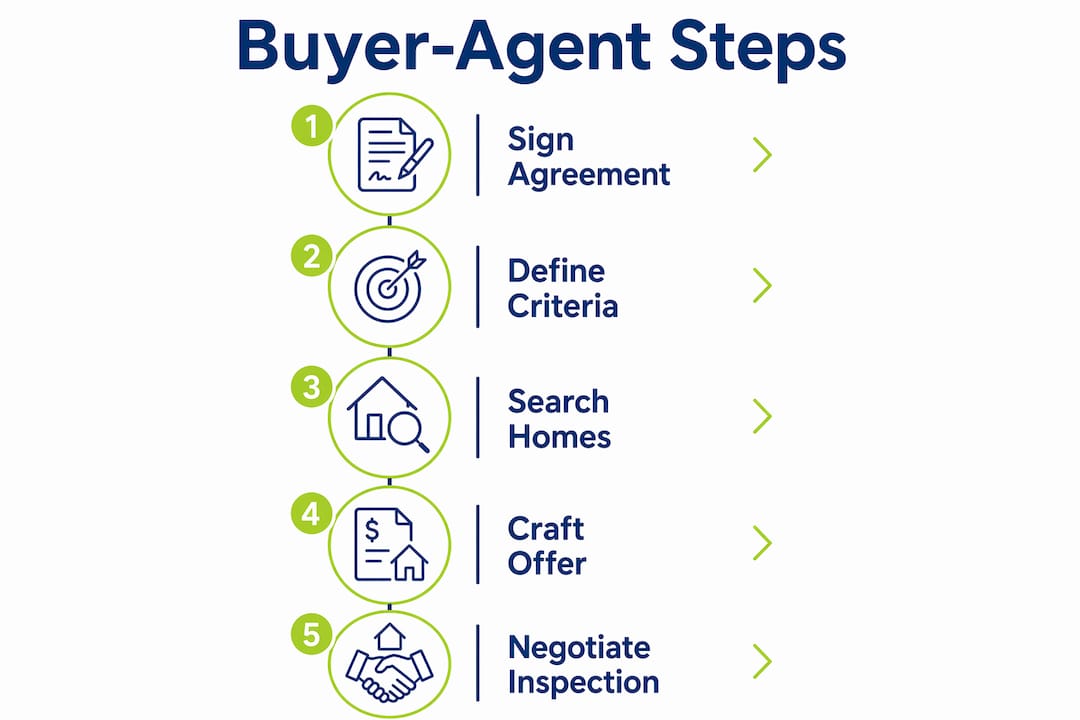
A buyer representation agreement is a written contract that defines the scope of your agent's services, the duration of the relationship, and how compensation works. Buyers must sign this agreement before touring homes, making the terms you negotiate here the foundation of the entire relationship.
The 2024 NAR settlement made compensation fully negotiable upfront, which means you are no longer locked into a fixed commission structure. Treat this agreement the way you would any professional services contract.
Here are the key terms to review and negotiate:
| Agreement Term | What to Look For | Why It Matters |
|---|---|---|
| Duration | 30–90 days is standard | Shorter terms give you an exit if the relationship isn't working |
| Compensation | Flat fee or percentage, clearly stated | You can negotiate this; never sign without understanding the number |
| Geographic scope | Specific cities or zip codes | Limits your agent's claim if you buy outside the agreed area |
| Exit clause | Conditions for termination | Protects you if the agent underperforms |
| Exclusivity | Whether you can work with other agents | Most agreements are exclusive; negotiate exceptions if needed |
Pro Tip: Never sign a buyer representation agreement at the first meeting under time pressure. Take it home, read every clause, and ask your agent to explain any term you don't understand before you commit.
This is where a successful buyer-agent relationship either delivers real value or falls apart. Your job is to stay actively involved at every phase, not hand everything off and wait.
Share your non-negotiables in writing before you tour a single property. That means school districts, commute limits, minimum square footage, and deal-breakers like flood zones or HOA restrictions. When your agent knows your hard limits, they stop sending listings that waste your time.
A strong offer in a competitive market includes more than just the right price. Your agent should advise on escalation clauses, flexible closing dates, and whether a pre-inspection makes sense. Understanding real estate negotiation tactics at this stage gives you a significant edge.
Post-inspection negotiation is where experienced buyer agents add the most financial value. The best agents use a three-bucket strategy for repair requests after inspection: items that require immediate action before closing, items where a credit is more practical than a repair, and items that are minor enough to waive in exchange for goodwill. This approach keeps the deal moving while still protecting your financial position.
Compare the two approaches:
| Approach | What It Looks Like | Likely Outcome |
|---|---|---|
| Passive buyer | Accepts inspection report, asks for everything | Seller rejects demands; deal falls apart |
| Active buyer with fiduciary agent | Uses three-bucket strategy, targets key items | Secures credits or repairs; deal closes |
You can also negotiate closing cost credits as part of the post-inspection conversation, which reduces your out-of-pocket expenses at closing.
The most costly mistake buyers make is contacting the listing agent directly. Listing agents represent the seller and cannot protect your interests or negotiate on your behalf. Calling them directly creates a conflict of interest that undermines your position before negotiations even begin.
"Bypassing your buyer's agent to contact the listing agent directly is the fastest way to lose your negotiating leverage. The listing agent's job is to get the best deal for the seller, not for you."
Other common mistakes include:
Respecting professional boundaries and treating the relationship as a genuine collaboration builds the trust your agent needs to negotiate hard on your behalf.
Working with a buyer agent effectively requires active participation, clear agreements, and consistent communication from the first meeting through closing day.
| Point | Details |
|---|---|
| Sign a clear agreement first | Negotiate duration, compensation, and exit clauses before touring any homes. |
| Understand fiduciary duty | A true buyer's agent protects your interests; a functionary agent just completes tasks. |
| Communicate your preferences upfront | Agree on channels, response times, and availability before the search begins. |
| Stay active during negotiations | Use the three-bucket inspection strategy to secure credits without killing the deal. |
| Never contact the listing agent directly | Doing so creates a conflict of interest and eliminates your negotiating leverage. |
Most buyers come to me treating the agent relationship like a vending machine. They put in their criteria and expect homes to come out. That mindset costs them money and deals.
The buyers who get the best outcomes are the ones who show up as partners. They read the buyer representation agreement before signing it. They ask hard questions about compensation. They respond to my messages within the hour when we are in a live negotiation. That responsiveness is not a courtesy. It is a competitive advantage.
The fiduciary distinction is one I take seriously. My job is not to close a deal. My job is to tell you when not to buy. I have walked buyers away from properties that looked great on paper but had foundation issues that would have cost them six figures. A functionary agent would have let that deal close and moved on.
One more thing: the post-inspection phase is where I earn my fee every single time. Most buyers either ask for too much and blow up the deal, or ask for nothing and leave money on the table. The three-bucket approach I use consistently gets buyers credits or repairs without triggering a seller walkout. That skill is not visible in a listing search. It shows up when the deal gets hard.
If you are searching for a buyer agent in Herndon, Reston, or Great Falls, ask any candidate how they handle post-inspection negotiations. Their answer will tell you everything.
— Mazin
Herndonhomeguide connects you directly with Mazin Abdelhameid, a local real estate professional with deep knowledge of the Herndon, Reston, and Great Falls markets. Every buyer gets a transparent representation agreement with clearly negotiated terms, not a one-size-fits-all contract.

Whether you are just starting your search or ready to make an offer, Herndonhomeguide gives you instant listing alerts, hyper-local market reports, and direct access to an agent who treats your purchase as a fiduciary responsibility. Visit Herndonhomeguide to connect with Mazin and get personalized guidance for your next move in Northern Virginia.
A buyer's agent handles property search, offer crafting, negotiation, contract management, and closing coordination on your behalf. Their fiduciary duty legally requires them to prioritize your interests over the seller's at every stage.
You sign a buyer representation agreement before touring homes, as required under current industry standards. Negotiate the duration, compensation, and exit clauses before you commit.
Ask how they handle post-inspection negotiations, what their communication response time is, and whether their agreement includes an exit clause. These three questions reveal whether an agent operates as a fiduciary or a functionary.
No. Listing agents represent the seller and cannot protect your interests. Contacting them directly creates a conflict of interest and weakens your negotiating position.
Standard agreements run 30–90 days. Shorter terms with clear exit clauses give you flexibility if the relationship is not producing results, which is why negotiating the duration upfront is one of the smartest moves a buyer can make.
A real estate agent coordinates the closing process by managing communication, deadlines, inspections, and paperwork across every party involved in the transaction. This coordination role is
What Does Real Estate Seasonality Mean for Buyers?Real estate seasonality is defined as the predictable annual cycle of fluctuations in buyer demand, home inventory, and prices that repeat at
Reston Homeowners Association: 2026 Resident GuideThe Reston Homeowners Association is the primary community organization governing property standards, amenities, and neighborhood rules for most
Work With a Buyer Agent Effectively in 2026A buyer's agent is defined as a licensed real estate professional who represents the buyer's legal and financial interests throughout the entire purchase
 © BRIGHT, All Rights Reserved
Information Deemed Reliable But Not Guaranteed
The data relating to real estate for sale on this website appears in part through the BRIGHT Internet Data Exchange program, a voluntary cooperative exchange of
property listing data between licensed real estate brokerage firms in which
participates, and is provided by BRIGHT through a licensing agreement.
The information provided by this website is for the personal,
non-commercial use of consumers and may not be used for any purpose other than to identify prospective properties consumers may be interested in purchasing.
Data last updated: September 21, 2026 8:07 AM UTC
Some properties which appear for sale on this website may no longer be available
because they are under contract, have Closed or are no longer being offered for sale.
Some real estate firms do not participate in IDX and their listings do not appear on this website. Some properties listed with participating firms do not appear on this website at the request of the seller.
Show More...
